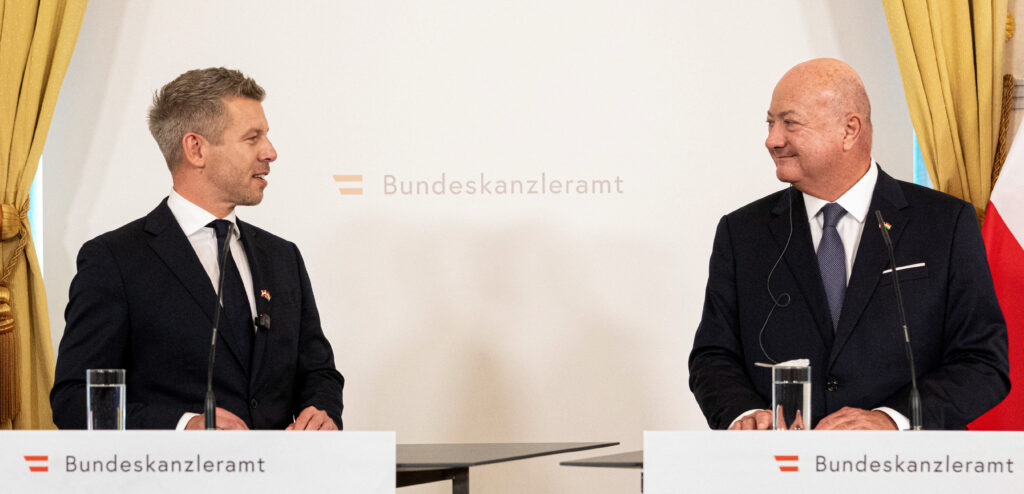
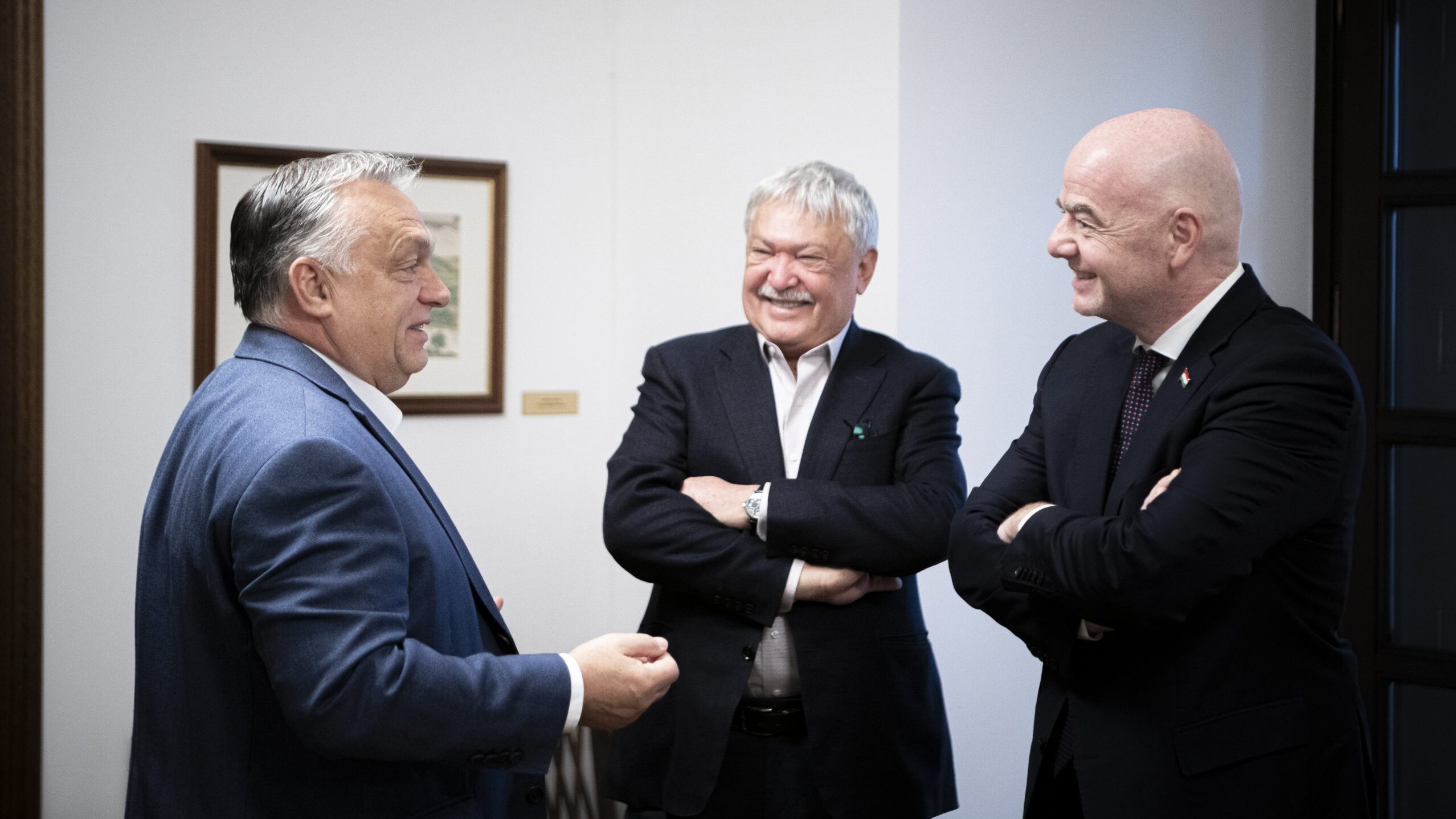
Viktor Orbán is reportedly examining a future outside Hungarian politics, with a senior role at FIFA and the deputy secretary-generalship of the United Nations emerging as two possible destinations for the former Hungarian prime minister after the April election defeat.
Hungarian investigative journalist Szabolcs Panyi reported on Sunday, citing several government officials and diplomatic sources, that Orbán has concluded that his career in Hungarian domestic politics has effectively run its course and is assessing international positions that would allow him to retain political status, contacts and influence. Fidesz communications director Bertalan Havasi rejected the report as ‘fake news’.
Orbán Barred from Returning as PM
Orbán’s immediate route back to the premiership has been closed by Tisza’s 16th Amendment to the Fundamental Law. Adopted in June, it retrospectively limits prime ministers to eight years in office, counting service since May 1990. Orbán served from 1998 to 2002 and from 2010 to 2026 and therefore cannot currently be elected prime minister. The restriction is reversible, however: another two-thirds parliamentary majority could amend the constitution and reopen the position to him.
Orbán has not declared his political fight over yet, but his response to Tisza’s constitutional overhaul has coincided with increasingly conspicuous absences from domestic politics. On 13 July, as Fidesz boycotted the 17th amendment—which removed President Tamás Sulyok and other Orbán-era office-holders and which the party denounced as the beginning of ‘tyranny’—Orbán left for the World Cup and was subsequently seen watching Spain play France in Dallas.
Days later, after Sulyok signed the amendment and prosecutors raided offices housing Fidesz servers in connection with a €46 million cultural-grant probe, Orbán issued a formal Declaration of Resistance, calling the emerging political order illegitimate and declaring that Hungary was no longer a democratic state. His US trip, however, was not purely a vacation: he also made previously undisclosed visits to the White House and State Department.
Football or Diplomacy?
Panyi now reports that the same trip included discussions with FIFA leadership about a possible position. His sources did not identify a particular job, but a FIFA vice-presidency is one conceivable route. FIFA’s 37-member Council contains eight vice-presidents, including Hungarian Football Federation president Sándor Csányi. Reaching such a position would require Orbán to work through football’s institutional structure rather than receive a direct appointment; European candidates must build support within UEFA and national associations.
The second possibility is potentially more powerful. Panyi first reported in May that figures in US MAGA circles were discussing helping Orbán obtain a high-ranking UN position. His latest reporting identifies the possible job as deputy secretary-general and says Orbán himself is interested.
Argentine President Javier Milei has also been mentioned as a potential supporter, partly through Argentina’s Rafael Grossi, one of the candidates to succeed António Guterres. Grossi currently trails Rebeca Grynspan and Carolyn Rodrigues-Birkett after the first Security Council straw poll.
The deputy secretary-general is appointed by the secretary-general after consultation with member states, meaning the decisive figure would be Guterres’s successor rather than the Hungarian government. A sufficiently senior UN appointment would also carry substantial diplomatic privileges and immunities unavailable at FIFA, although such protections are not unlimited and can be waived by the UN.
Orbán has publicly offered a less dramatic picture of life after frontline politics. In a July interview, he said the time had not yet come to retire, but that when it did he had six grandchildren to spend time with, would ‘gladly’ work at the Puskás Academy he founded, and expected to teach again, saying: ‘I have something to say to young people.’
A Less Comfortable Future Prospect
Hungarians themselves appear to imagine a considerably less comfortable future for Orbán, at least according to a May survey. Conducted by Medián, the poll found that 65 per cent of respondents believed the former prime minister had committed sufficiently serious illegalities to be brought before a court, while only 28 per cent said he bore political responsibility but should not face legal proceedings. Support for accountability reached 88 per cent among Tisza voters and even 12 per cent among Fidesz supporters.
In June, the governing Tisza Party launched ‘Operation Purgatory’, a constitutional overhaul with the stated goal of rooting out the ‘political and economic patronage network’ built around Fidesz–KDNP and Orbán and holding those responsible to account. The new government has already established a new anti-corruption and asset-recovery super-agency with unusually broad powers, including investigative and prosecutorial functions.
Prime Minister Péter Magyar and Tisza politicians have stated countless times that the alleged systemic corruption and abuse of power were coordinated from the top, by Orbán himself. Their preferred outcome would therefore be to see the former prime minister behind bars.
Investigations into several corruption-related cases have already been launched or accelerated since April, including the aforementioned July raid; however, none currently relates directly to Orbán, nor has any concrete evidence been presented in the major cases frequently cited in connection with him. Yet the prospect of eventually facing such charges could make an international ‘great escape’ an increasingly viable route for Orbán.
Related articles:
At a time when public debate is increasingly polarized and superficial, Hungarian Conservative remains committed to depth, intellectual honesty, and independent conservative thought.
Producing high-quality journalism requires resources. Your contribution helps us expand our coverage, reach new audiences, and keep our content accessible.

Please consider supporting our mission.