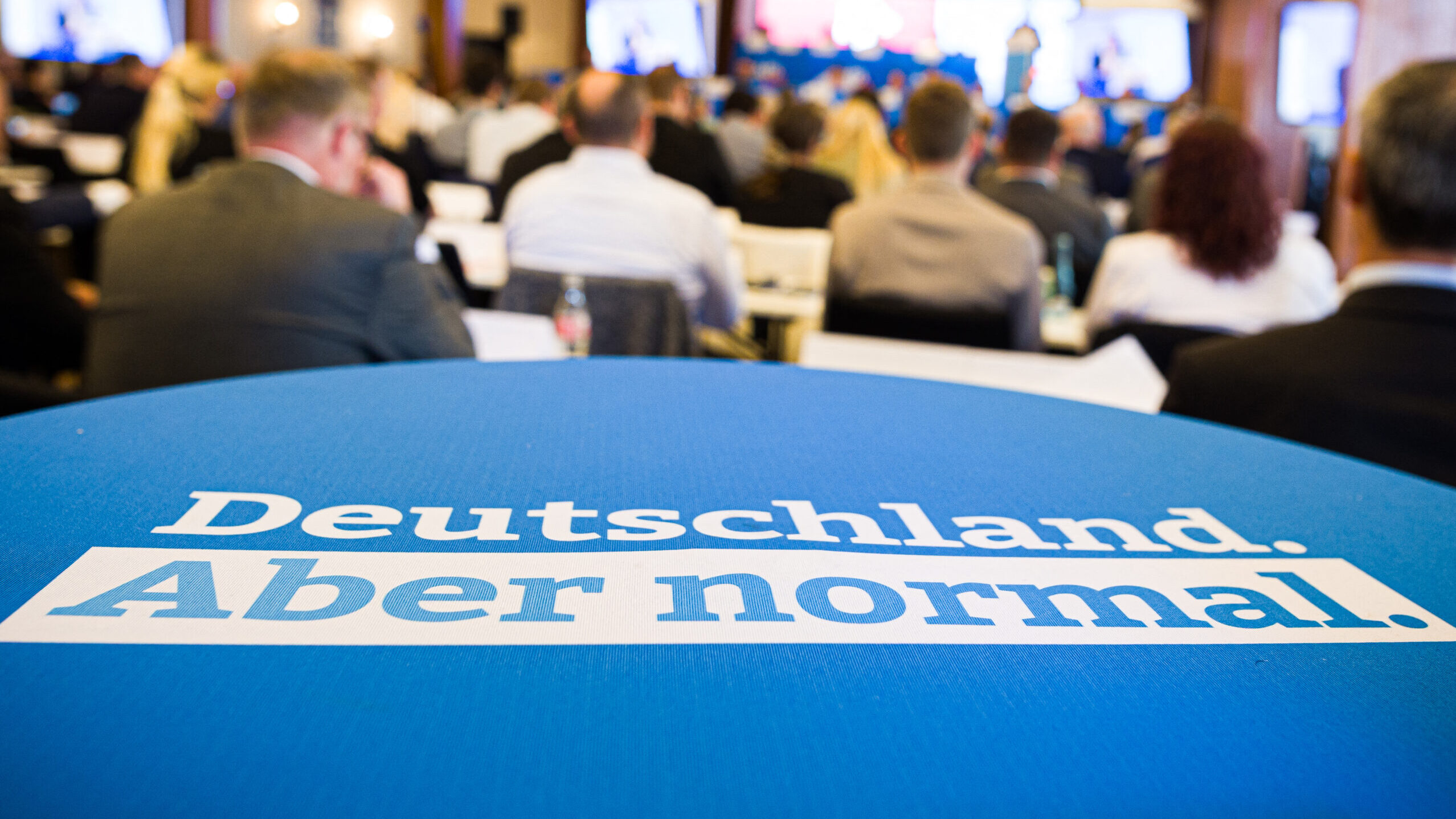
Germany’s anti-immigration right-wing party Alternative für Deutschland (AfD) appears to be continuing its rise in popularity. According to a recently published INSA poll for Bild am Sonntag, AfD reached a record high of 28 per cent nationwide, placing it four points ahead of the governing Christian Democratic Union (CDU).
According to the survey, published on 26 April, the CDU’s coalition partner, the Social Democratic Party (SPD), stands at 14 per cent, followed by the Greens at 12 per cent and The Left at 11 per cent.
Moreover, according to another INSA poll conducted for Tichys Einblick, the largest share of respondents—27 per cent—would like to see the next chancellor come from AfD. One of the most striking findings of the survey, published on 24 April, is that the CDU and its Bavarian sister party, the Christian Social Union (CSU), together account for only 12 per cent of respondents, with 8 per cent and 4 per cent respectively. AfD alone more than doubles that figure.
This suggests a severe erosion of Friedrich Merz’s personal legitimacy as chancellor, extending beyond ordinary party-preference polling. It also indicates that many Germans who may still hesitate to vote for AfD nevertheless increasingly see the party as the natural claimant to the chancellorship.
Ein Rekord muss alle ins Mark treffen, die noch glauben, die CDU wäre eine bürgerliche Partei. Acht Prozent wünschen sich einen Kanzler der CDU und vier Prozent einen der CSU. https://t.co/5YAdweRg7H pic.twitter.com/dOJZKA6V2a
— Tichys Einblick (@TichysEinblick) April 27, 2026
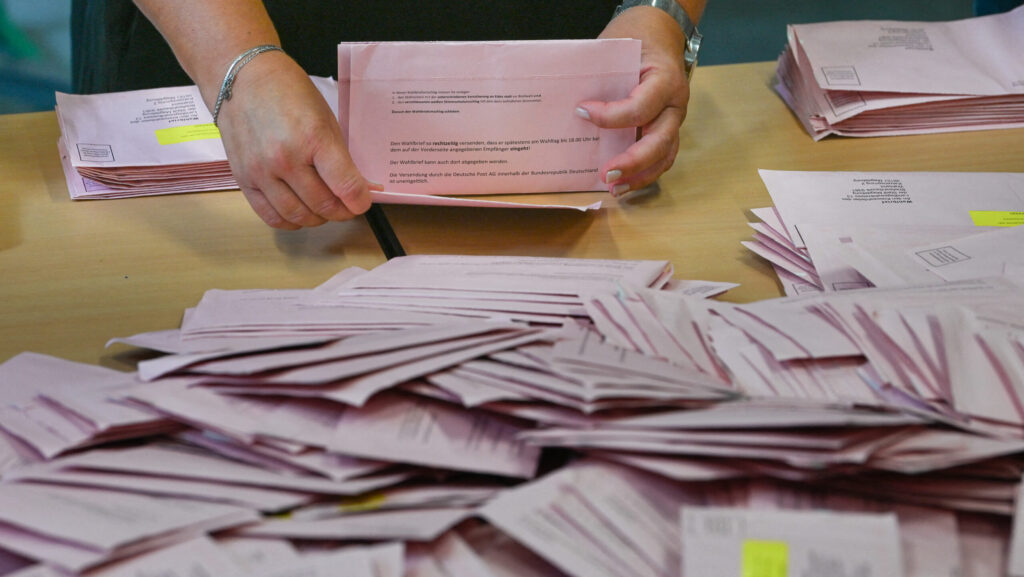
The recent polling data follow a successful series of election results for AfD. Over recent months, several important state elections were held in western Germany, where the party significantly increased its support—doubling or nearly tripling its vote share compared to previous elections.
In Rhineland-Palatinate, AfD secured 19.5 per cent in mid-March, more than doubling its support and finishing just behind the SPD, which recorded its worst result in decades. Similarly, in Baden-Württemberg, the party doubled its support in the 8 March election, reaching 18.8 per cent, up from around 9 per cent in 2021. In municipal elections in Hesse, AfD secured 15.9 per cent statewide, again more than doubling its previous result. In several municipalities, the party surpassed 25 per cent and, in some cases, finished ahead of the Greens, CDU, and SPD.
While AfD’s traditional strongholds have been in eastern Germany, these results indicate that the party is gaining ground in western regions as well, where its message had previously enjoyed more limited resonance. AfD is also currently the most popular party among younger voters, polling well ahead of establishment parties within that demographic.
AfD is well positioned to secure another victory in the September state election in eastern Germany’s Saxony-Anhalt, where the party is polling significantly above its national average, at around 40 per cent.
In response to AfD’s rise in the eastern state, mainstream parties including the CDU, SPD, Greens, the liberal Free Democratic Party (FDP), and The Left jointly pushed through a controversial parliamentary reform, making it easier for them to bypass the strongest parliamentary faction in appointing the speaker of the state legislature and constitutional judges. In practice, this reduces the blocking power AfD could obtain if it secures more than one-third of the seats—a scenario for which it appears well positioned.
AfD politicians condemned the reform as a ‘power-preservation construct’ driven by fear of the election outcome. Critics have also warned that the move risks reinforcing AfD’s long-standing narrative that Germany’s mainstream parties are increasingly willing to rewrite institutional rules in order to prevent the populist right from translating electoral gains into political power.
AfD remains designated as a ‘proven right-wing extremist’ party and as ‘not compatible’ with Germany’s free democratic order by the country’s domestic intelligence agency, the BfV, a classification that grants authorities expanded surveillance powers to monitor the party and its leadership.
Related articles:
At a time when public debate is increasingly polarized and superficial, Hungarian Conservative remains committed to depth, intellectual honesty, and independent conservative thought.
Producing high-quality journalism requires resources. Your contribution helps us expand our coverage, reach new audiences, and keep our content accessible.

Please consider supporting our mission.