The Strait of Hormuz, a critical global trade chokepoint through which roughly one-fifth of the world’s maritime oil and LNG shipments used to pass, has been effectively closed since early March. Iran’s Islamist regime imposed the shutdown by threatening missile strikes on commercial vessels and laying mines in the strait in response to US–Israeli strikes on the country that began on 28 February.
As of now, negotiations between the United States and Iran are ongoing through the mediator Pakistan and the active armed conflict has been limited, helping to ease some investor fears. Crude oil prices have thus moderated from their crisis peaks. At the time of writing, futures for American-produced WTI crude are trading at around $96 per barrel, down significantly from highs of $110 during the height of the crisis. Brent crude, the British benchmark, currently sits at approximately $101 per barrel.
Still, lower oil prices do not mean the global economy has fully escaped the fallout.
Instead, suppliers are increasingly exploring alternative shipping routes. According to the Budapest-based economic think tank Oeconomus Foundation, Arctic maritime corridors are experiencing unusually heavy traffic for this time of year. Normally, commercial vessels avoid the route in April due to ice hazards.
This shift builds on an existing trend. Based on 2024–2025 data, Arctic shipping currently accounts for just 0.35 per cent of global maritime trade. However, Oeconomus estimates that due to climate change and the restructuring of global shipping patterns, that share could rise to 2–5 per cent by 2030.
The Hormuz crisis has only accelerated this process, the foundation argues. Its analysis also notes that the Arctic had already been proposed as a strategic alternative in 2021, when the Suez Canal was blocked by the Ever Given shipping incident.
The northern route’s greatest advantage is distance: it can reduce travel time between Europe and East Asia by as much as 30 to 40 per cent compared to traditional southern routes. That translates into major savings in both time and fuel.
By contrast, with Hormuz effectively shut, many vessels are now being rerouted around Africa, adding an estimated 20 to 25 days to the travel time while also creating severe port congestion. In comparison, the traditionally high costs and logistical challenges of Arctic shipping appear less prohibitive than the mounting uncertainty in southern waters.
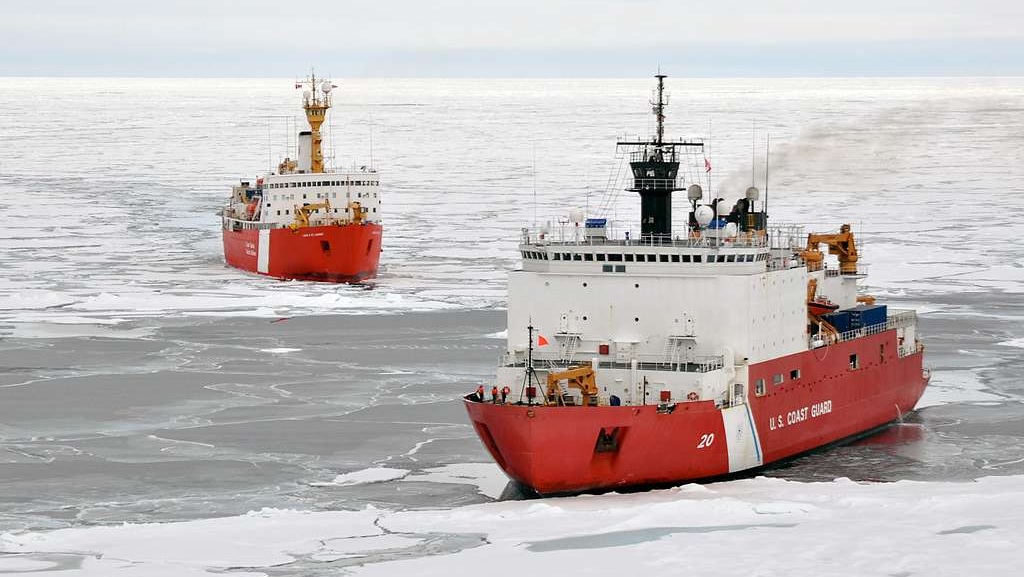
That said, the northern route is far from a perfect solution. Ice hazards remain a major obstacle, and under normal conditions, Arctic passage is generally considered safe only from July through October. In 2026, however, Russian and Chinese icebreakers reportedly began clearing parts of the route a month earlier than usual.
Although the Arctic route offers a significantly shorter distance, it also comes with major drawbacks.
Ships must travel more slowly through icy waters and often require the costly assistance of icebreakers to navigate safely. Infrastructure across much of the region remains underdeveloped as well, limiting the route’s broader commercial viability. Adding to the geopolitical implications, much of the recent infrastructure investment has been financed by Chinese capital, further deepening strategic cooperation between Russia and China.
Related articles:
At a time when public debate is increasingly polarized and superficial, Hungarian Conservative remains committed to depth, intellectual honesty, and independent conservative thought.
Producing high-quality journalism requires resources. Your contribution helps us expand our coverage, reach new audiences, and keep our content accessible.

Please consider supporting our mission.