On 28 April, after almost 60 years of membership the United Arab Emirates announced its decision to quit the Organization of the Petroleum Exporting Countries (OPEC). The decision is said to be a direct outcome of a planned and well-thought-out strategy whereby recent developments in the country’s energy sector have made OPEC membership a disadvantage rather than an advantage for the monarchy.
However, considering the manner of the announcement both in term of its speed and the short implementation period—the decision will took effect on Friday 1 May—some might argue that long-term strategic decision-making was not the only factor. Ultimately, the big question is what comes next for the UAE, OPEC and the global energy market?
Regarding the global oil market, the direct, and immediate consequences seem to be limited so far. Even though oil prices have fallen slightly, Hormuz-related risks continue to dominate the near-term outlook.
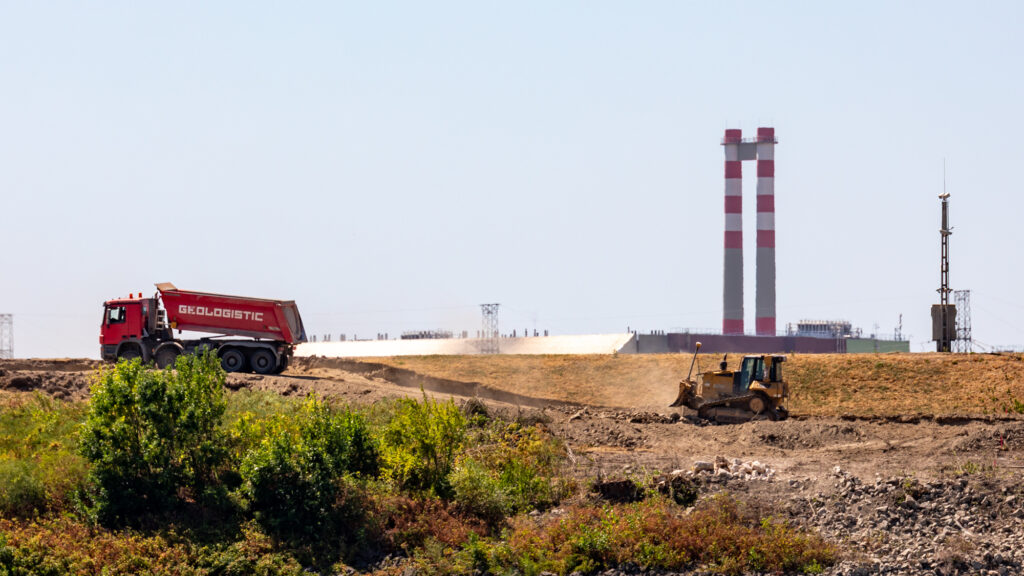
This leads straight to the next point. A key objective of the UAE is to increase oil production to meet it with the increasing global demand. However, even if the monarchy manages to increase its oil production as it is planned by ADNOC, it will not change the fundamental geographical challenges. Like the others in the region, the UAE trades its oil through the Strait. This means that without ships to transport its oil the impact of the monarchy’s strategy is doomed to be limited, regardless of the scale of its achievements.
Not even the UAE’s often-cited pipeline (ADCOP)—intended to counter or at least to reduce the overall impact of the total loss of Strait of Hormuz oil exports—can help with this physical reality. Not only is the pipeline’s capacity is far from matching the UAE’s oil production aspirations for the future, but even though it bypasses the Strait, it leads to Fujairah on the Gulf of Oman which is still far from being safe in the current circumstances.
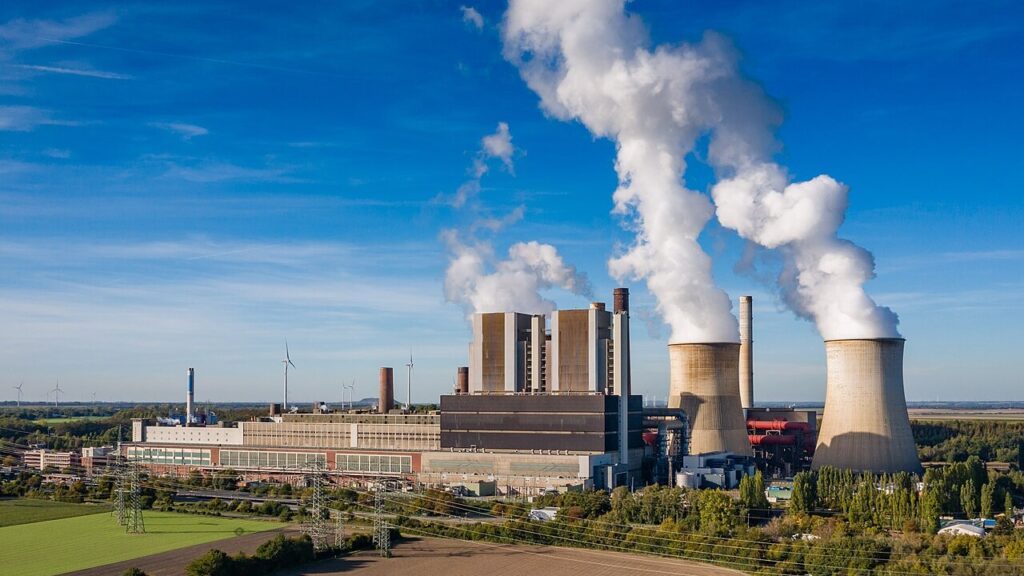
In contrast, in the long run, however, the monarchy’s decision to leave OPEC could significantly reshape the region’s energy landscape, especially if it triggers a domino effect and other OPEC member states would follow the suit. With the UAE’s departure OPEC will lose its fourth-largest oil producer country responsible for around 10 per cent of OPEC’s total oil production. This is far from being something that can be ignored, but the worst is yet to come.
‘The monarchy’s decision to leave OPEC could significantly reshape the region’s energy landscape’
In theory, the more countries act similarly—especially major producers such as Saudi Arabia, Iraq, Iran, or Kuwait with the largest production volumes and oil reserves—the greater the potential damage to OPEC’s market power. Under such circumstances, in an extreme case, even the break-up of the organization could become imaginable.
The possible break-up of OPEC could point in different directions. One interpretation is that, with individual exporters acting entirely according to their own considerations and interests, stronger competition could emerge, and a more fragmented market might result in an overall price drop. Another interpretation is that, given OPEC’s deep integration into the global oil market, its disappearance could generate serious uncertainty across the entire market, which in turn could have price-increasing effects.
Going one step further than the direct consequences for the oil market, renewables may also gain increasing momentum. Gulf countries are placing growing emphasis on diversifying their economies, partly due to energy security concerns.
One key consideration behind this trend is that these countries have realized that over-dependency on fossil fuel exports could be a dangerous structural feature, which they are now experiencing first-hand. A scenario involving falling oil prices and waning market influence may provide an additional boost to the rise of renewables. However, this transition is not an easy one, especially since these countries’ economies still predominantly rely on hydrocarbons.
‘Over-dependency on fossil fuel exports could be a dangerous structural feature, which they are now experiencing first-hand’
From a regional and global perspective, it is worth mentioning the reactions of Iran, the US, and China, among others, and the consequences affecting these countries. If Iran’s strategy is truly based on creating serious disruption to the global economy by targeting energy infrastructure across the Gulf region, thereby putting pressure on the US and others, any development that could alter and potentially soften the situation—for example, growing oil production and exports to the global market—may threaten this Iranian strategy.
From this point of view, the escalation of Iranian attacks on the UAE’s energy infrastructure cannot be ruled out, while the country has already been among the most severely targeted Gulf states. Regarding the United States, it could emerge as one of the winners of this situation. For its energy dominance strategy, one key competitor in the global energy field is OPEC. Therefore, its weakening may indirectly create space and opportunities for US influence to grow.
Finally, another important question is how China would react to such an ‘OPEC fade-away’ scenario: would it maintain a business-as-usual approach with Gulf countries, or would it shift focus more toward other markets, such as Russia?
In short, the United Arab Emirates’ exit from OPEC could have far-reaching consequences both locally and globally. Given the geographical and infrastructural conditions of the UAE and the broader region, the first cannot be changed, while the required transformation of the second is mainly a matter of time, which is by no means short. Therefore, any immediate, far-reaching effects do not seem likely, while the long-term consequences cannot be identified with certainty; however, it appears that OPEC’s future is a crucial part of the equation.
Related articles:
At a time when public debate is increasingly polarized and superficial, Hungarian Conservative remains committed to depth, intellectual honesty, and independent conservative thought.
Producing high-quality journalism requires resources. Your contribution helps us expand our coverage, reach new audiences, and keep our content accessible.

Please consider supporting our mission.