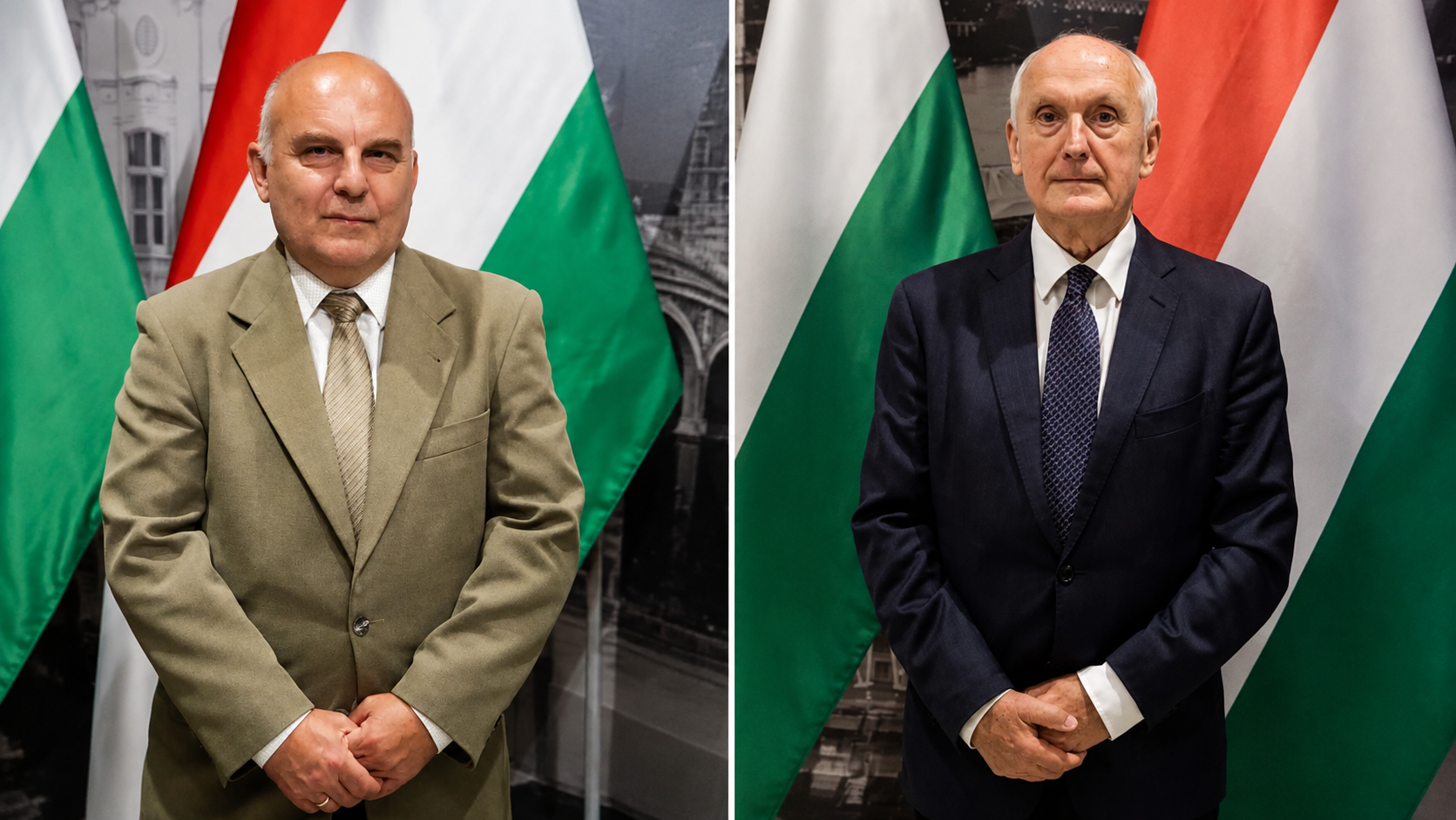
Hungary’s governing Tisza Party has proposed that parliament elect the next president in five days, on Tuesday, 11 August, after parliamentary group leader Andrea Bujdosó submitted the initiative on Wednesday. The proposed vote would take place just 22 days after Tamás Sulyok’s mandate ended on 20 July—and more than a week before the expiry of the 30-day constitutional deadline for choosing his successor—despite there being no concrete publicly known nominee for the position.
The parliamentary group, Bujdosó revealed on Thursday, 6 August, will vote on its nominee on Saturday, adding that its goal is to choose from among several candidates during the meeting. Without mentioning any names, she said that Tisza was still discussing how it would present its candidate.
Why the vote is being rushed becomes clear from the procedural timetable: the head of state takes office on the eighth day after being elected, which would fall on 19 August, one day before St Stephen’s Day, the 1,026th anniversary of the foundation of the Christian Hungarian state. It is the country’s largest and most significant national holiday, meant to symbolize unity across political divisions, generations and the borders of modern Hungary.
Representing national unity is among the most frequently cited features of a president among Tisza politicians, supporters and Péter Magyar as well. The prime minister has repeatedly said that the country needs a president who is ‘loyal not to one political camp, but to the Hungarian nation and to every Hungarian’. He used precisely that as an argument to justify removing President Sulyok, whose priorities, Magyar claimed, placed ‘loyalty to Fidesz’ first and ‘constitutionalism and national unity’ last.
After Tisza’s landslide electoral victory on 12 April, which resulted in a constitutional supermajority of 141 MPs in the 199-seat parliament, Magyar repeatedly called on Sulyok and other public officeholders, including the Prosecutor General, to resign, describing them as the ‘puppets of Orbán’ and claiming that Tisza had won a mandate to dismantle what he described as the ‘political and economic patronage network’ built around Orbán and Fidesz over the past 16 years. Parliament passed the 17th amendment on 13 July, which was promulgated by Sulyok himself a week later; the following day, he ceased to be head of state. Since then, parliamentary speaker and Tisza MP Ágnes Forsthoffer has filled the position as acting president until parliament elects Sulyok’s successor.
That explains why it is of utmost importance for Tisza—or personally for Magyar—to have a president sworn in by 20 August: it would serve as one of the most important ‘bricks’ in the party’s ‘regime change’ narrative, while the date and occasion would give it a symbolic character—a feature the party has placed at the centre of many of its actions since taking office.
Losing the Top Candidate
Rushing the nomination, however, already cost Tisza its number-one candidate. On the day Sulyok signed the amendment, Magyar promised a wider consultation procedure involving academics and ordinary citizens. Just a day later, he named Hungarian chess grandmaster Judit Polgár as Tisza’s candidate, causing a major backlash among supporters and confusion within his party’s ranks as well. The next day, Polgár rejected the offer, while Magyar acknowledged that his rushed communication had played a major part in the failed nomination.
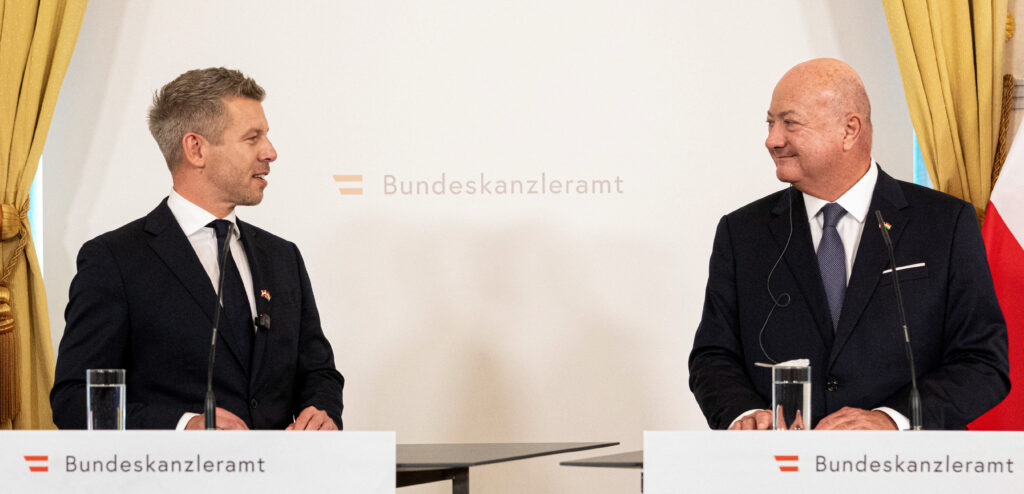
After the blunder, Tisza changed strategy and launched a social media casting process to measure support for its potential nominees. A day after Polgár’s rejection, Magyar and Minister heading the Prime Minister’s Office Bálint Ruff appeared in a photo with Botond Fülöp, known as Vidéki prókátor, the lawyer who uncovered the pardon scandal that ended President Katalin Novák’s political career and subsequently kicked off Magyar’s and the Tisza Party’s two-year journey to power.
‘Rushing the nomination, however, already cost Tisza its number-one candidate’
Just two days later, Magyar and Ruff appeared in an almost identical photo with historian Ignác Romsics. Both names have been circulating publicly as potential presidential candidates for months, and while the prime minister did not mention the presidency itself in the posts, users immediately identified the pattern as a selection process.
The casting process was interrupted by an unprecedented heatwave and drought that pushed Paks, Hungary’s only nuclear power plant, almost fully offline, resulting in a looming energy crisis. By 6 August, three of its four units had shut because of record-low Danube levels. The government urged companies and households to cut electricity use during peak evening hours, while MAVIR recorded demand reductions of 500–700 MW, prompting Magyar to praise national unity and shared burden-bearing.
Now, as the Danube’s level has risen for two consecutive days and the heatwave has peaked and may ease, the casting process has officially returned, this time with the same photo of Magyar, Ruff and András Baka, on the same day that Tisza’s parliamentary group proposed the date of the vote.
Symbolism Overload
Baka has not been considered among the most frequently cited names until now; however, his background explains why Tisza might ultimately stick with him. He served as director-general of the College of Public Administration and spent 17 years as a judge at the European Court of Human Rights, including ten years as a section vice-president, before becoming president of Hungary’s Supreme Court in 2009.
His six-year mandate was terminated on 1 January 2012, three and a half years early, when the Orbán government reorganized the Supreme Court as the Kúria and used transitional constitutional provisions to require the election of a new president.
Baka said at the time that his removal was ‘obviously unlawful’, arguing that he was being forced out because of his criticism of the judicial overhaul and noting that no domestic court could review the decision. The amendment drew wider EU criticism, while the Council of Europe’s Venice Commission specifically raised concerns over Baka’s removal; in 2016, the European Court of Human Rights ruled that Hungary had violated his rights to judicial access and freedom of expression, finding that his mandate had been terminated because of his public criticism.
The procedure used to remove Baka is very similar to how Tisza removed President Sulyok, and it is also the most frequently cited counterargument when Fidesz attacks the move as contrary to the rule of law and a sign of tyranny. Orbán and the former governing party released a ‘Declaration of Resistance’ after Sulyok was removed, describing the new constitutional order as ‘illegitimate and authoritarian’. Fidesz parliamentary leader János Bóka said the party would boycott Tuesday’s vote and would not participate in what he called ‘the latest charade of Tisza’s autocracy’.
Baka’s potential nomination is intended precisely to tackle that argument by holding up a tilted mirror. However, regarding the criterion of being capable of uniting the nation, he might fall short. The former chief justice has become a symbolic figure of opposition to the Orbán system, comparing Hungary’s rule-of-law conditions to the communist era, addressing an anti-government demonstration by judges and, most recently, supporting the removal of senior public officials appointed under Fidesz—including Sulyok himself. Critics therefore argue that his nomination would resemble the political vindication of one camp rather than the choice of a neutral figure capable of commanding confidence on both sides, as Judit Polgár was.
That might not bother Tisza and its supporters at all in the end, as analysts and intellectuals sympathetic to the new government have already mentioned another criterion the new president must meet: publicly condemning and speaking out against Orbán over the past decade.
‘If symbolism drives Tisza’s final choice, Fülöp should be considered the ultimate frontrunner’
There is another similarly symbolic potential pick for Tisza: Botond Fülöp, better known as Vidéki prókátor. The lawyer remained anonymous until May, building a substantial following through political and legal commentary on Facebook that frequently anticipated Tisza’s positions. He previously worked at the Court of Justice of the European Union between 2005 and 2011 and describes his outlook in terms of Christian-conservative patriotism, a civic Hungary and constitutional limits on even the strongest parliamentary majorities. Although he came from a conservative background and was once close to Fidesz as a supporter, he later broke decisively with the party. Both Fülöp and Magyar have acknowledged that their political worldviews are very similar.
Fülöp may ultimately prove the most politically natural choice. His discovery of the presidential pardon granted to a children’s home deputy director convicted of coercing child-abuse victims to withdraw their testimony against the same institution’s director, who was later convicted of sexually abusing children, forced President Novák to resign, started Péter Magyar’s political career and significantly damaged Fidesz’s credibility. The moral crisis caused by the scandal led many voters who had stuck with Orbán to leave the party for Tisza, while child protection became one of the defining and symbolic issues of the campaign. If symbolism drives Tisza’s final choice, Fülöp should be considered the ultimate frontrunner.
Alternative Candidates and the Limits of Social Media Casting
Beyond Fülöp, historian Ignác Romsics remains the classic establishment option. The Széchenyi Prize-winning scholar has said that a president should possess authority independently of the office, although he previously questioned his own suitability because of his age, temperament and limited political embeddedness. Former judge Adrienn Laczó, who resigned earlier amid concerns over judicial independence, would offer another legal and openly anti-Orbán choice.
The few actual polls conducted, however, favoured other candidates, such as former MP Ákos Hadházy and former justice minister Péter Bárándy. Both appear politically unlikely: Hadházy has a strained relationship with Magyar, while the prime minister has effectively excluded figures associated with the ‘old opposition’.
That also reveals the democratic deficit of the social media casting process: it genuinely offers voters a chance to express their support for or disapproval of certain candidates. However, the candidates being measured are ultimately selected by Tisza, with the two most popular candidates effectively excluded from the start. That means that while voters are seemingly involved in the selection, they are being steered towards certain conclusions from the outset.
‘While voters are seemingly involved in the selection, they are being steered towards certain conclusions from the outset’
While Fidesz has vowed not to participate in the election process, the hard-right Our Homeland nominated energy lawyer Máté Tóth, pointing to his two doctorates and expertise capable of defending Hungary’s constitutional traditions. Tóth has long participated in the party’s intellectual circles and has also appeared frequently in Fidesz-aligned media in recent years, making him obviously unacceptable to Tisza supporters, although that was never the goal in the first place.
With six MPs, MHM cannot formally nominate a candidate alone; yet it could position itself as much more constructive than Fidesz, making the party a natural choice for sympathizers unwilling to go along with resistance politics. The party has already strengthened its support at Fidesz’s expense, according to a July poll by Europion.
Whom Tisza ultimately picks on Saturday is still unknown, but the current signs suggest someone between Baka and Fülöp, while it is also not out of the question that other candidates will be presented on social media before the group decides. One thing is certain: the party wants someone whom the overwhelming majority of supporters approve of and who has gone through some kind of consultation procedure—for example, the casting process. The failure of Polgár’s nomination already resulted in the party’s first decline in support since April, and it would most likely prefer to avoid another damaging nomination blunder.
Related articles:
At a time when public debate is increasingly polarized and superficial, Hungarian Conservative remains committed to depth, intellectual honesty, and independent conservative thought.
Producing high-quality journalism requires resources. Your contribution helps us expand our coverage, reach new audiences, and keep our content accessible.

Please consider supporting our mission.